
Home › Outdoor Living
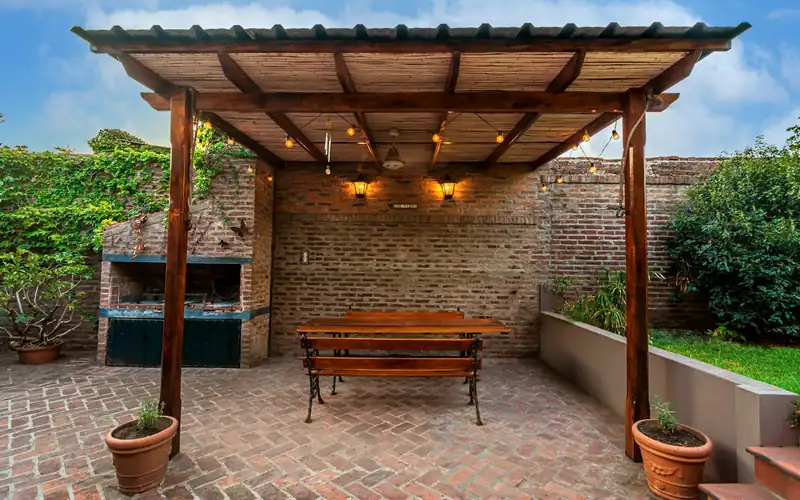
Fire pits, outdoor kitchens and pergolas
Turn a patio into a place you actually use, from a simple fire pit to a full outdoor kitchen. Call (000) 000-0000 or send the form for a free estimate. We'll review your request and help you with the next step.
- Free for homeowners
- Credentials checked before referral
- Built with the patio, or added later
Request a Free Landscaping Estimate
Tell us what you have in mind. We'll review it and help you with the next step.
Please add your name, a 10-digit phone number and a valid email.
Sorry, we couldn't save your request just now. Please call (000) 000-0000 so it isn't lost.
We've received several requests from this connection in a short time. Please call (000) 000-0000 and we'll take it from there.
What it involves
Plan it around how you'll use it
The most-used outdoor spaces are close to the kitchen door, get some shade in the afternoon and have room for the table you actually own. Start with how many people you host, whether you cook outside or just eat there, and whether you want a fire to sit around. The pieces follow from that.
- Fire pits and fireplaces: wood or gas, built from block or stone, often with a ring of seating wall around them.
- Outdoor kitchens: from a grill station on a masonry base to an island with a sink, refrigerator and counter space. Utilities are the big cost variable.
- Pergolas: wood, vinyl or aluminum, for partial shade and a frame for lights or climbing plants. They need proper footings to resist frost heave and wind.
- Seating walls and steps: built from the same block as the patio so everything matches.
- Lighting: low-voltage path and step lights for safety, accent lights for trees and walls.
Utilities and permits
The trades behind the stonework
A landscaper builds the base, walls and surfaces. Anything that carries gas, water or line-voltage electricity brings in a licensed trade with its own permit: a gas fitter or plumber for gas lines, a plumber for water and drains, an electrician for outlets and circuits. Ask the contractor who they use and who pulls each permit.
The state building code doesn't name pergolas, outdoor kitchens or fire pits in its list of permit-exempt work. Check with the local building department before work starts. If a pergola is attached to the house, or a structure sits close to a property line, zoning setbacks can come into it too.
Any digging for footings or utility lines needs a Dig Safe notice (811) at least 72 hours ahead, not counting weekends and holidays.
Before you sign
Questions worth asking
- Which parts are you building, and which go to subcontractors? Who pulls each permit?
- What are the footings for the pergola or kitchen island, and how deep?
- How will the space drain, especially next to the house?
- What needs to be shut off, drained or covered in the fall?
If the project includes work covered by the state home improvement contractor law, such as a deck or an attached structure, contracts over $1,000 must be in writing and the deposit is capped at one-third of the price unless special-order materials cost more. Either way, get the scope, price and schedule in writing.
FAQ
Outdoor living questions
Does an outdoor kitchen or pergola need a building permit?
It depends on the size and what's in it. The state residential code doesn't specifically list pergolas, outdoor kitchens or fire pits as exempt, so ask the local building department. Any gas line or electrical circuit needs its own permit and a licensed plumber, gas fitter or electrician.
Wood or gas fire pit?
Wood gives the real crackle and costs less to build. Gas lights with a switch, makes less smoke and is easier on close neighbors, but it needs a gas line or propane and a licensed installer. Some towns have rules on open burning, so check locally before building a wood pit.
Can these be added to an existing patio?
Often, if the patio base is solid. A heavy masonry kitchen island or a pergola needs footings, so the contractor may cut into the patio for those or recommend building them alongside it.
How far should a fire pit be from the house?
Follow the manufacturer's clearances for the unit and ask the local fire department what it requires. Keep it away from overhanging branches, wood fences and decks.
What holds up to New England winters?
Stone, masonry, stainless steel and cedar or treated lumber with good drainage at the base. Covers for grills and cushions, and shutting off and draining water lines in the fall, add years of life.
Other services