
Home › Landscape Design & Plantings
Landscape design and planting for the whole yard
A plan first, then beds, shrubs and trees chosen for your light, soil and how you use the yard. Call (000) 000-0000 or send the form for a free estimate. We'll review your request and help you with the next step.
- Free for homeowners
- Credentials checked before referral
- Plans you can build in phases
Request a Free Landscaping Estimate
Tell us about the yard. We'll review it and help you with the next step.
Please add your name, a 10-digit phone number and a valid email.
Sorry, we couldn't save your request just now. Please call (000) 000-0000 so it isn't lost.
We've received several requests from this connection in a short time. Please call (000) 000-0000 and we'll take it from there.
What it involves
Start with the site, not the plant list
The plants that thrive in a yard are decided by things that are already there: how many hours of sun each area gets, whether the soil is sandy and dry or heavy and wet, which way water runs, and what the deer already eat. A design starts by mapping those, then works out how you want to use the space, and only then picks plants.
A typical landscape design covers:
- A site visit and measurements: property lines, the house, existing trees, slopes, utilities and wet spots.
- A layout showing beds, lawn, paths, patio and any walls, with how people move through the yard.
- A planting plan: species, sizes and spacing, chosen for sun, soil and mature size so nothing outgrows its spot in five years.
- Phasing, if you'd rather spread the cost over several seasons.
Ask whether the design fee is credited toward installation, and whether you get a drawing you can keep.
Planting
What goes into a planting job
Bed preparation
Removing sod and weeds, loosening compacted soil and adding organic matter where the existing soil is thin or sandy. Skipping this step is the most common reason new plantings struggle.
Foundation plantings
Shrubs sized for their mature height so they don't block windows or crowd the siding, with enough space from the foundation for air and maintenance.
Trees
Planted with the root flare at grade, not buried. Ask about placement relative to the house, power lines and septic systems before anything goes in.
Perennial and pollinator beds
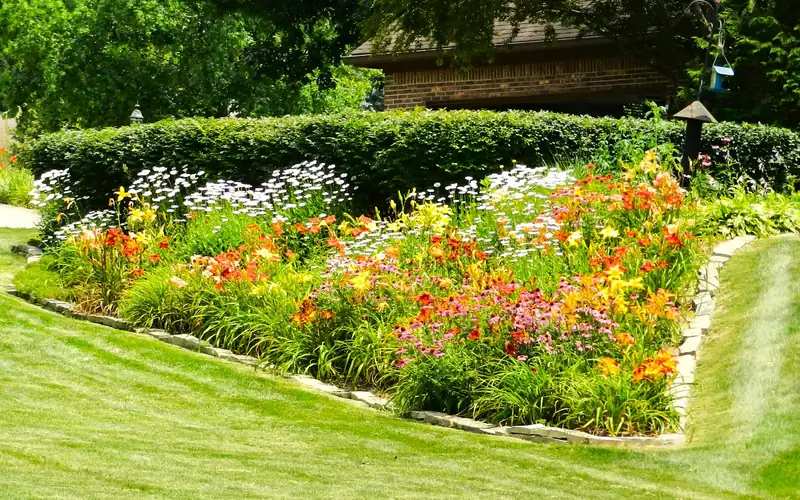
Layers of plants that bloom across the season. Native species tend to need less watering once established.
Mulch and edging
A few inches of mulch to hold moisture and suppress weeds, kept off trunks and stems. A clean edge keeps lawn from creeping into the beds.
Massachusetts rules
Water, wetlands and pesticides
Watering restrictions. Local water suppliers set outdoor watering limits, and the state asks communities to restrict nonessential outdoor use during declared droughts. New plantings need regular water their first season, so check your town's rules before scheduling a big summer planting. Town pages link the local water department.
Irrigation. An irrigation system connected to the public water supply needs an approved backflow device, installed by a Massachusetts licensed plumber.
Wetlands. Within 100 feet of a wetland, state rules treat native plantings as a minor activity; turning a buffer into lawn is not. Check with the conservation commission before clearing.
Pesticides. Anyone applying pesticides for hire needs a Massachusetts pesticide applicator license.
FAQ
Landscape design questions
Do I need a full design, or can I just get plantings?
For a few shrubs along the foundation, a planting plan is enough. If you're adding a patio, a wall and new beds over the next few years, a full yard plan saves money because each phase fits the next instead of being torn out.
When is the best time to plant in Massachusetts?
Spring and early fall. Fall planting gives roots time to settle while the soil is still warm and the air is cool. Summer planting works but needs steady watering, and local watering restrictions can make that harder in a dry year.
Will the plants be native?
Ask for them. Native plants generally handle local soil and weather well and support pollinators. Within 100 feet of a wetland, state rules treat native plantings more favorably than lawn, which can matter if your yard backs onto a stream or pond.
Does a landscape designer need a license?
Massachusetts doesn't require Home Improvement Contractor registration for contractors who only do landscaping. If the work includes applying pesticides for hire, the applicator needs a state pesticide license.
What about deer?
If deer come through your yard, tell the designer. A good planting plan leans on plants deer tend to leave alone near the edges of the yard and keeps favorites closer to the house, or plans for fencing.