
Home › Yard Drainage
Yard drainage for soggy lawns and wet foundations
Grading, drains, dry wells and downspout fixes that move water where it can go. Call (000) 000-0000 or send the form for a free estimate. We'll review your request and help you with the next step.
- Free for homeowners
- Credentials checked before referral
- Find the cause, then fix it
Request a Free Landscaping Estimate
Tell us where the water collects. We'll review it and help you with the next step.
Please add your name, a 10-digit phone number and a valid email.
Sorry, we couldn't save your request just now. Please call (000) 000-0000 so it isn't lost.
We've received several requests from this connection in a short time. Please call (000) 000-0000 and we'll take it from there.
What it involves
Find out where the water comes from
A wet yard has a cause, and the right fix depends on which one it is. Surface water running off a neighbor's slope, roof water dumped at the foundation, a low spot with nowhere to drain, compacted soil that can't absorb rain, and a high water table all look similar from the window and need different solutions.
A good contractor watches where water goes in a storm, or asks you to photograph it, before recommending anything. Then the fix usually comes from this list:
- Regrading so the ground falls away from the house.
- Downspout extensions or buried leaders carrying roof water away from the foundation.
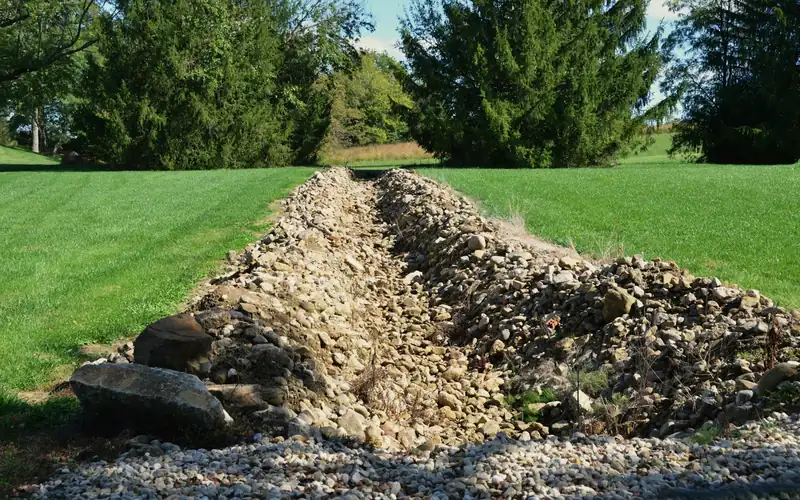
- Swales, shallow grassed or stone-lined channels that steer surface water around the house.
- French drains to intercept groundwater and seepage.
- Dry wells to let collected water soak in where the soil allows.
- Rain gardens: planted depressions that hold runoff for a day or two while it soaks in.
Soil matters
Sand, clay and ledge change the answer
Soils in the Merrimack Valley range from deep sand and gravel along the rivers to glacial till over bedrock on the hills. In sandy soil, a dry well or rain garden can absorb a lot of water. In clay, the same dry well fills and stays full, and the water has to be carried somewhere instead. Where bedrock is close to the surface, deep trenches may not be practical at all.
That's why drainage estimates vary so much. Ask each contractor what they think is causing the problem and how they know.
Massachusetts rules
Wetlands, Dig Safe and contracts
Wetlands. Yards that stay wet are sometimes next to, or part of, a regulated wetland. Under the Wetlands Protection Act, work within 100 feet of a wetland generally needs the local conservation commission's review first, and filling or draining a wetland itself needs approval. If you're not sure, the commission can tell you whether your project needs a filing.
Dig Safe. Drain trenches and dry wells are excavation, so a Dig Safe notice (811) is required at least 72 hours ahead, not counting weekends and holidays.
Contracts. Grading and drainage by a landscape-only contractor may fall outside the state home improvement contract rules, so ask for a written contract that spells out the scope, the outlet for the water and the price.
New England Landscapers is a referral service. We don't do landscaping work or pull permits; the contractor who does the job handles the filings it needs.
FAQ
Yard drainage questions
Is a wet basement a landscaping problem?
Sometimes. Grading that slopes toward the house and downspouts that dump next to the foundation are common, fixable causes on the outside. If water is coming up through the floor or the walls have cracks, that's a foundation or waterproofing question for a different trade.
Can I just pipe the water onto the street or my neighbor's yard?
Generally no. Redirecting runoff onto a neighbor's property causes disputes, and many towns regulate connections to the street drainage system. A good drainage plan keeps water on your lot and lets it soak in or move it to a suitable outlet.
Do drainage projects need permits?
Ordinary regrading and drains often don't need a building permit, but work within 100 feet of a wetland or stream generally goes to the local conservation commission first, and some towns have stormwater rules for larger projects. Every job involving digging needs a Dig Safe notice.
What is a French drain?
A trench lined with fabric and filled with clean stone, usually around a perforated pipe, that collects groundwater and surface water and carries it downhill to an outlet or dry well.
What's a dry well?
An underground chamber or stone pit that takes water from downspouts or a drain and lets it soak into the soil gradually. It works best in sandy or gravelly soil and poorly in heavy clay or where groundwater is high.
Other services